What beats a 308

My god Unclenick you really sound like you know your stuff :o

I could sit in a room and listen to you all night....talking gun stuff of coarse :D

Some of what you just wrote sounds like really interesting stuff and I will print your post and try to research your knowledge a bit to sort the science bit out in my head a bit more. The choice of bullet will be easier then I think....thanks very much
 
You're welcome. I wanted to bring that to your attention because there are some higher BC's available in some 7 mm bullets. Also, a lot of 6.5 mm bullets have high BC's, which is why the 6.5-284 Norma became a darling of the F-Class 1000 yard shooters. They can scoot a 142 grain Matchking out fast enough to match the magnum .30's with much heavier bullets without incurring more recoil than a .308. Sometimes they are referred to as "laser-like", but be aware the penalty for pushing larger quantities of slower powder down a narrower bore is about half the peak accuracy bore life of a .308.

Use the ballistics calculators at the free on line JBM Ballistics site already linked to. At the bottom of the page is a stability calculator if you are unsure about the combination of a particular bullet with a particular barrels rifling pitch.
 
Dragline, I dont know about deer in Scotland, but I usually take 4 to 6 whitetails on closing day in Georgia. Three is definitely doable if their deer are anything like White tails.
 
Scottish Highlander- You made a good choice by sticking with the .308. For the stag at 200 yards and under its as good as anything else you could get.

If you still get the itch for another rifle someday, (you will) look at some of the smaller, flatter shooting calibers. Might come in handy If you ever get an opportunity for a longer range hunt. Although the .308 is a good long range round as well. Some to consider might be .270, 6.5 creedmoor, .25-06, .257 wby (if you can afford the ammo) just to name a few
 
In New Zealand they used to pay people to shoot deer as there numbers were out of control and were just wrecking the place, and shooting three in one day would be a piece of cake.
To say that socially, environmentally and ecologically Scotland and America are a different would be a massive understatement.

I'd also just stick to your 308, and like Unclenick also pointed out, bullet selection will have a huge difference to wind drift characteristics.
But in 30-40mph winds any shot with any caliber is not going to be an easy one.

Which part of Scotland do you live in?
I've heard that to hunt deer in England and Wales can be a difficult exercise, as its either hard to find spots to hunt them, or people charge you to do so.
But Scotland has deer galore.

Have you been to shootforum.com, its a UK based forum, and is a lot different to this one, with most of the articles/threads being a lot more relevant to you, not surprising seeings as 99% of people here are American.
 
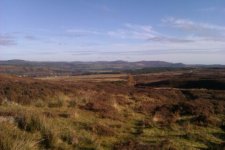
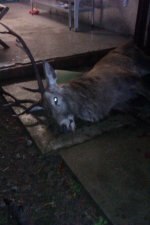
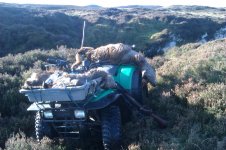
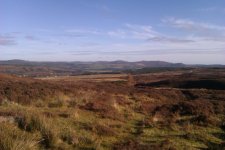
Trg, here is 2 pics. One is of a good stag I shot last Autumn and a snap shot of the moor land I stalk. I live 50 miles north of Inverness right up in the top of Scotland.
 

Attachments

  • mob pics 313.jpg
    mob pics 313.jpg
    35.7 KB · Views: 42
  • mob pics 194.jpg
    mob pics 194.jpg
    242.1 KB · Views: 41
Last edited:
Scottish Highlander, I don't hunt, just a personal preference. Reading the posts, based on your original question/query, so very interesting. The members of this group are so very knowledgeable.

The views across that wild landscape, awesome. I presume your deer would be butchered, and off to the freezer? That would make sense to me.

Just as well you are communicating by the written word! Jocks are hard to understand! Now Scousers, that's the Queens English!
 
Highlander, if I ever win the lotto, I will come to Scotland to hunt red stag, and when I do I'll bring my 7mm rem mag, and we'll shoot every bullet they let me bring.;)
 
Scottish Highlander Why not pick up a 6.5x55 for hunting. Its easy on the shoulder and great rifles avalible in europe. For a handloader is a smart choice. If I was a younger hunter today my first choice would be a 6.5mm not my 308 and 7mm rm. With the bullet designs out there today you just don't need a faster harder hitting cartidges. .
 
Thanks everyone, it is very bonny up here and I certainly dont take it for granted. I am going to take Unclenicks advice and look into the science of the projectile part a bit more to combat windy days and ohhh lord we do get some :D

On a windy day you are going to get drift on your shot but the wind helps with the stalk too so its good and bad really. On a flat calm day in the winter here an hour before dark you can walk out the hill with the wind on your back and as dusk comes in and the cold air its swung right round by 180 deg and is then on your face. Its good to know the habbits of the land your working.

On the rifle front I think I am going to get one for sure but the 308 Tikka is staying with me and I'll take Unclenicks advice and improve the loads and practice to get a good relationship going with the rifle. The 7mm is a possibility for a second but if the 308 is as heavy a rifle I need for red stalking then there is no need to go bigger really. The 223 or a 22-250 is a strong contender I think but I'll need to check the laws in Scotland to see if its legal to cull deer with these as there is a min legal caliber. How do the 223 and the 22-250 compare together. I know someone who swears by his 22-250 and its a fast fast bullet I'm led to believe with a flat trajectory
 
Scotland

For roe deer, where the bullet must weigh at least 50 grains AND have a minimum muzzle velocity of 2,450 feet per second AND a minimum muzzle energy of 1,000 foot pounds may be used.

For all deer of any species - the bullet must weigh at least 100 grains AND have a minimum muzzle velocity of 2,450 feet per second AND a minimum muzzle energy of 1,750 foot pounds.

It must be stressed that all these figures are the minimum legal requirement.

For all deer stalking the bullet must be of a type designed to expand/deform on impact.

This is the laws in scotland through the BASC regulator of laws.
 
No Free Lunch

Any round that offers a significant "improvement" over the .308 will also have its own drawbacks. The same weight (or heavier) bullet at higher speeds means more recoil.

Bigger rounds also mean higher cost. Flatter trajectory is a matter of inches, literally, and is very much a question of what you can use, versus cost, recoil, etc...

In the US, the 125gr bullet is not the common deer load, We use bullets in the 150-180gr range for deer and other big game. I have had very good results with the 165gr hunting bullets, being nearly as flat shooting as the 150s, and having most of the mass advantage of the 180s.

While the .223 and the .22-250 are legal for deer in some parts of the US, in most of the country they are considered too small, rifles of .24 caliber (6mm) or larger being required. The .22-250 is about 400-600fps faster than the .223, depending on which bullet/load you are looking at.

While fast and flat shooting, the .22s have a higher wind drift than bigger bullet with higher BCs.

Also, if using the .22s (either one) bullet selection is critical. The majority of loads are varmint loads, and the bullet perfiormance that delivers exposive kills on a woodchuck is not the one you want to take deer with.
 
Ruger had a quote in his last post about faster being harder hitting.


Not always the case. Momentum = Mass * Velocity

P=M*V

Momentum is what kills not speed necessarily. Although speed is a determining factor that contributes to Momentum.

Example:

Bullet grains of 150
Velocity of 2900 fps
Momentum = 435000p

Bullet grains 175
Velocity of 2728
Momentum = 477400p
 
Don't forget that the extra velocity down the pipe also results in shorter life span for the barrel.

I may be oversimplifying but for hunters trading mass for velocity seems like a bad trade to me. Mass matters on the wind and on impact on the deer. For target shooters trading mass for velocity is a good trade because it reduces recoil and flinching and there's only paper to punch not bone and muscle.

When it's all said and done it's hard for hunters to beat a 308.

P.S. IMO UncleNick has probably forgotten more than most of us will ever learn about bullets and shooting.
 
Last edited:
Scottish Highlander said:
…at least 100 grains AND have a minimum muzzle velocity of 2,450 feet per second AND a minimum muzzle energy of 1,750 foot pounds.

That knocks all the normal .22's out, as 90 grain match bullets are about as heavy as are commonly available in .224" bullets, and even those need a 7" twist barrel to stabilize and they don't expand reliably. 100 grains is not uncommon in 6 mm (.243 in U.S. bullets), but I'm not seeing BC's as high in the 6 mm or in the .257's as you get with the 6.5 mm to 7 mm bullets. You could do a lot worse than the 140 grain Hornady SST in 6.5 mm, using something that pushes it fast to make it flatter shooting. But also good an BC are their 150 grain .270 SST or their 162 grain 7 mm SST. These have G1 BC's of 0.520, 0.525, and 0.550, respectively.

One other factor to consider is how much flat shooting really matters to you, and that depends in part on how you sight in your rifle. Let's take your .308 Winchester and the 6.5-284 I mentioned earlier. Say that we load the Hornady 180 grain Interbond (G1 BC of .480) at 2600 fps in the .308 and the Hornady 140 Grain SST in the 6.5-284 at 2900 fps. I use Jeff Cooper's idea that you set the sights of any high power rifle to be on at 200 yards. That puts the bullet around 2"-2.5" high at 100 yards for most cartridges and it then stays within a 5" circle from the firing point all the way to somewhere between 200 and 300. If you have a 10" aiming circle (deer), that leaves half the circle for the gun and half for the shooter's hold error¹.

So, let's see what the differences look like:

The .308, 180 grain Interbond, BC=0.480", 2600 fps MV, sight zero at 200 yards

Apogee 2.5" inches high at 111 yards
PB limit: -2.5" low at 235 yards
Correction at 300 yards: Hold 9.4" high
30 mph side wind drift at 300 yards, 22.2 inches

The 6.5-284, 140 grain SST, BC=0.520, 2900 fps MV, sight zero at 200 yards

Apogee 1.9" at 114 yards
PB limit: -2.5" at 244 yards
Correction at 300 yards: Hold 7.2" high
30 mph side wind drift at 300 yard, 17.3"

So, for all that flatter shooting, I gain 9 yards of point blank range and 2.2" lower holdover at 300 yards when using a shared 200 yard zero. It is the wind where the biggest difference turns up.

You could squeeze a little more out of the 6.5-284 by taking the zero range out far enough to get a 2.5" apogee, like the .308 had. This means sighting the faster round at 224 yards instead of at 200 yards. You get:

Apogee 2.5" at 125 yards
PB limit: -2.5" at 264 yards
Correction at 300 yards: Hold 5.6" high
30 mph side wind drift at 300 yard, 17.3"

So that gets you about 1.5 moa less holdover at 300. Anyway, I just wanted to be sure you got the idea that with practical sighting the differences aren't quite so big as the advertising hype might lead you to believe.

 
That knocks all the normal .22's out, as 90 grain match bullets are about as heavy as are commonly available in .224" bullets, and even those need a 7" twist barrel to stabilize and they don't expand reliably. 100 grains is not uncommon in 6 mm (.243 in U.S. bullets), but I'm not seeing BC's as high in the 6 mm or in the .257's as you get with the 6.5 mm to 7 mm bullets. You could do a lot worse than the 140 grain Hornady SST in 6.5 mm, using something that pushes it fast to make it flatter shooting. But also good an BC are their 150 grain .270 SST or their 162 grain 7 mm SST. These have G1 BC's of 0.520, 0.525, and 0.550, respectively.

One other factor to consider is how much flat shooting really matters to you, and that depends in part on how you sight in your rifle. Let's take your .308 Winchester and the 6.5-284 I mentioned earlier. Say that we load the Hornady 180 grain Interbond (G1 BC of .480) at 2600 fps in the .308 and the Hornady 140 Grain SST in the 6.5-284 at 2900 fps. I use Jeff Cooper's idea that you set the sights of any high power rifle to be on at 200 yards. That puts the bullet around 2"-2.5" high at 100 yards for most cartridges and it then stays within a 5" circle from the firing point all the way to somewhere between 200 and 300. If you have a 10" aiming circle (deer), that leaves half the circle for the gun and half for the shooter's hold error¹.

So, let's see what the differences look like:

The .308, 180 grain Interbond, BC=0.480", 2600 fps MV, sight zero at 200 yards

Apogee 2.5" inches high at 111 yards
PB limit: -2.5" low at 235 yards
Correction at 300 yards: Hold 9.4" high
30 mph side wind drift at 300 yards, 22.2 inches

The 6.5-284, 140 grain SST, BC=0.520, 2900 fps MV, sight zero at 200 yards

Apogee 1.9" at 114 yards
PB limit: -2.5" at 244 yards
Correction at 300 yards: Hold 7.2" high
30 mph side wind drift at 300 yard, 17.3"

So, for all that flatter shooting, I gain 9 yards of point blank range and 2.2" lower holdover at 300 yards when using a shared 200 yard zero. It is the wind where the biggest difference turns up.

You could squeeze a little more out of the 6.5-284 by taking the zero range out far enough to get a 2.5" apogee, like the .308 had. This means sighting the faster round at 224 yards instead of at 200 yards. You get:

Apogee 2.5" at 125 yards
PB limit: -2.5" at 264 yards
Correction at 300 yards: Hold 5.6" high
30 mph side wind drift at 300 yard, 17.3"

So that gets you about 1.5 moa less holdover at 300. Anyway, I just wanted to be sure you got the idea that with practical sighting the differences aren't quite so big as the advertising hype might lead you to believe.

This is one of the best examples of shooting being a game of wind, not distance.
 
Back
Top