Why did the U.S. army turn their back on the lever gun after the Civil War?

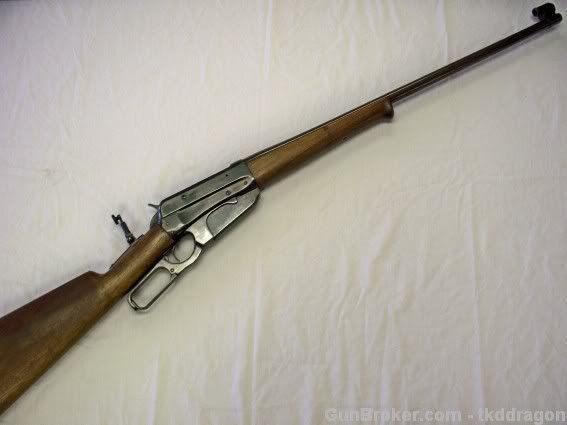
"However, Rooseveldt had already armed his unit at his own expense with the model 1895..."

Not quite.

Roosevelt pulled strings, befitting his status as former Assistant Secretary of the Navy, and got his volunteer troops Krag-Jorgenson rifles. They were apparently the only volunteer unit so equipped; other volunteer units were armed with trapdoor Springfields.

Roosevelt did have a personally obtained Model 1895, and he also presented Model 1895s to, I believe, all of the officers in the 1st US Volunteer Cavalry.

Later, he also presented an engraved Model 1895 to Gen. Leonard Wood (the original commander of the Rough Riders) after Wood was named military governor of Cuba.

But Roosevelt did not arm all of the men in the Rough Riders with Model 1895s.
 
Bolt actions were not perfected enough and seriously considered until the navy dabbled with the M1885 Remington–Lee; and it was bested by the 1892 Krag. So the bolt action wasn't in the picture in this gap of 25 years or so when "the west was won"so to speak. That's all I'm talking about. Once you had practical bolt actions they were much more rugged and powerful and were repeaters and could be fired from a prone position and so on, game over for the lever as a military gun.

The Savage 1895 (or was it the 1899?) was the last gasp at an attempt to get the government interested in a lever action military rifle.
 
It still would have made sense to have some mix of lever rifles to keep from being over run. Indians were far from stupidly coming at them from the open several hundred yards away. The lever rifle would have been the SAW of its day prior to the advent of the bolt action.
The problem with lever rifles of the time was, despite being able to fire a lot of rounds quickly, they take longer to reload. It has long be held that men with single shot trapdoor rifles (Carbines for Custer's troops), can, over a length of time, shoot more rounds than those who are using magazine-fed lever actions or even bolt actions. Gun magazines (pre-internet), would proclaim that to be true until the the invention of the stripper clip for bolt actions.
 
"The problem with lever rifles of the time was, despite being able to fire a lot of rounds quickly, they take longer to reload."

The Blakeslee box cut reloading time for a Spencer by about 2/3rds over loading with loose cartridges.
 
I guess because the topic involves lever actions, those have been featured. But in the real world, there would be little difference between the Model 1895 Winchester and the Krag firing the same ammunition. In fact, the Krag would have been superior in that it could be reloaded much faster and had a magazine cutoff to hold the magazine in reserve. In both rifles, a partially depleted magazine could be topped off without opening the bolt.

Jim
 
It still would have made sense to have some mix of lever rifles to keep from being over run. Indians were far from stupidly coming at them from the open several hundred yards away. The lever rifle would have been the SAW of its day prior to the advent of the bolt action.

Not exactly. A machinegun needs to be able to lay down suppressive fire so that can free up another element to maneuver on the enemy, that means it needs to be able to fire rapidly, long enough, to allow people to run into a position of advantage against the enemy. At the time the US Army wasn't doing much Small Unit Tactics (SUT) as it didn't even have the positions of "Platoon Leader" and "Platoon Sergeant" until WWI.

Even the idea of a SAW in the old west is an anachronism. The crew served weapons of the day were Gatling guns and cannon. The method of tactical transport was horse and wagon. Carrying around 800 rounds of ammunition per lever gun in an attempt to use it in a suppressive fire role would have the quarter master looking you square in the eye and saying, "No, you want that much ammo just to blast away to make the indians keep their heads down, YOU carry it in your kit for the next six months."

With the adoption of motor vehicles military units could carry far more stuff than before. But even then the logistics of fueling a forward deployed military force is a staggering amount of work.

Jimro
 
Fire and maneuver is a relatively recent concept, really being born in the aftermath of World War I's trench warfare, and as a possible means of not repeating that fiasco.

Remember that in the earliest days of the machine gun most of them were quite heavy and water cooled, so they were treated, and used, as fixed position guns, primarily for defensive purposes.
 
Yes, well here's what comes of stingy quartermasters.

https://www.youtube.com/watch?v=d17vfJ7bUVo

Do you have any idea how ignorant that sounds?

No, that's what happens when a force has a meeting engagement without adequate preparation to execute the preferred tactics of the British Army which included extensive engineering prep of defenses and engagement zones. Even with essentially unlimited ammunition you can find yourself in a bad position against an enemy force superior in number if not equipment, I'll get back to this in a minute.

Tactics at the time generally called for Officers to command the formation, ordering when to fire, when to advance, what to do. Like I stated before, small unit tactics were not really a thing until post WWI.

This shows that in action: https://www.youtube.com/watch?v=raBNUUj1-fY

However, the British had essentially the same logistical problem as the US Army. How in the world do you support a contingent of men with arms, ammunition, food, fuel, mail, medical care, and maintain lines of communication in places where there are no roads or railroads?

When packing up for a deployment, or a patrol, you can't take everything with you. That 1,600 rounds of ammo for two SAW gunner in today's Infantry squad was likely more ammo than carried by a US Platoon in the post civil war Army. In the three times I've deployed, space and weight were always at a premium, and modern vehicles can carry a whole lot more than horses or mules.

And if you don't believe me about how difficult it is to get everything you want into the backside of nowhere, just look at the attack on COP Keating or the Battle of Wanat.

https://www.youtube.com/watch?v=AxrwROErlmY
https://www.youtube.com/watch?v=ylUzySZb3L8

Jimro
 
Why do you think I'm arguing tactics or logistics? That's ignorance if you ask me. I'm just talking about bringing more firepower to bear using ammunition already in the supply chain.

I've read "The Washing of the Spears" and I know about the logistics of the Zulu war. Yes, it was a big, unweildy caravan. So what?
 
Kcub,

It's awesome that you read a book. But you basically are trying to argue that ammunition made in England, transported by steam vessel, to a port, from port to wagon, from wagon to the unit in the field, could somehow magically produce excess capacity to overstock the unit in the field at above consumption rates.

Every bit of excess class V you have on hand is more stuff to move making movement slower. Every bit of excess class V is some other class of supply that you don't have but is equally vital. If you want to build that excess into the supply chain it costs money and Governments aren't generally fond of funding excess.

And even then, you are asking British Officers to abandon all their training to embrace a style of warfare that wouldn't come about for another four decades. This was an invasion with 6,600 regular troops and one Gatling gun. If the log chain wasn't enough to support more than one Gatling, how in the world is the supply chain going to handle a doubling, or tripling of consumption rate per individual soldier?

Ammunition conservation was a huge concern for military forces of the era because supply by wagon train, aka "big unwieldy caravan" isn't confidence inspiring for resupply.

Think of it as the water problem, the hotter it is, the more water an individual soldier needs to carry, but the more water a soldier carries the more water the soldier has to use to stay hydrated under the burden, the more it slows movement which means more time in the heat which means more water. The good thing about water is that you can "generally" acquire water most everywhere you go. Ammunition is only consumed in use, but it weighs on the Soldier, requiring more food, more water, so for every extra round of ammo on the individual soldier the more other classes of supply are needed to maintain that soldier.

A more thorough discussion of "The Soldier's Load" from the British perspective can be found here: https://www.gov.uk/government/uploa...55089/20150820-FOI06779_The_Soldiers_Load.pdf

Still, the British won the war against the Zulu with single shot rifles, and the American West was pacified with single shot rifles, so the folks back then must have known something about their business.

Jimro
 
Yep, you're right. The American Army existed in such an magnificent vacuum that they had NO clue what anyone else was doing.


Right...

The book, "The Ordnance Department: Planning Munitions for War" Vol 1 in the Series United States Army in World War II, the first in the series "The Ordnance Department" explicit states the first part, slightly reworded, for the period after WW1. For weapon system after weapon system, particular for tanks, artillery, and anti tank systems, the Army was quite clueless about what anyone was doing outside the shores of the US.

This is from page 208: "The Role of Technical Intelligence”

Ordnance Officers with engineering background were ideally the men to serve in this capacity and to prepare the technical reports on foreign ordnance. But the number of Ordnance officers qualified by experience who also had the necessary command of a foreign language and who had the private incomes large enough to meet the expenses of a tour of duty abroad was small: in fact, between 1920 and 1940 there were only nine, and between November 1930 and May 1940, only two- Maj Philip R Faymonville in Moscow and Capt. Rene R Studler assigned to London.

It is important to note that Army per diem was so low, that an Army Officer or Government Civilian would go bankrupt overseas unless they were personally rich enough to afford the billet!

I have no reason to assume that at any time the Army Ordnance Department has moved out of their own delusional, grandiose bubble universe.

In fact, it was such a vacuumatic organization that they didn't even know what the hell they were doing...

Since this is the way they act now, I have no reason to believe it was any different at any other time period in history. Large organizations get stove piped. You have to force people to "patrol their boundaries". The Department of Defense is particularly poor about sharing information within an agency, never mind, between agencies. A long list of reasons can be made, one of the first on the list is "need to know". Employees don't have a "need to know" what anyone else is doing and employees are required to exhibit a proper amount of disinterest for things outside of their cubicle. It is a security violation to have more than a certain lack of curiosity about the things going on within the office or agency. Contacts I have, they find out what the people down the hall are doing by reading the newspaper!

The Department of Defense is so dysfunctional that the Packard Commission’s recommendations on Acquisition Reform were made law in the Goldwater-Nichols Defense Reorganization of 1986.https://en.wikipedia.org/wiki/Packard_Commission Since then DoD has been forcing its workforce to get Acquisition Training and Education. DoD employees cannot be promoted unless they have taken DAU courses and have DAU certification. The primary reason for this, was, as the Packard Commission stated, there was no rational system for Defense Acquisition.

Mike, you reported seeing at NRA Headquarters a number of fired rounds of the 1921 Tin can ammunition with case necks attached. The Army blamed grease for that problem, still does, even after fielding the 20mm Oerlikon which used greased ammunition. This tiny historical event sure makes the point that the vaunted Ordnance Department did not know what they were doing then, and now.

 
Last edited:
Heh, reminds me of the relatively recent pmag kerfuffle

“Units are only authorized to use the Army-authorized magazines listed in the technical manuals, authorized NSNs have ever been included in the technical manuals. Just because an item has an NSN, does not mean the Army is an authorized user.” LTC Emerton, TACOM spokesman, May 2012.

“At best, the message is incomplete; at worst the message allows soldiers to jump to the wrong conclusions. Maintenance Information Messages [from TACOM] are permissive. They are not an order. They are not a directive. All content and direction in those messages are optional for the recipient.” Matthew Bourke, Pentagon Spokesman, June 2012

However the DOD acquisition is generally married at the hip to big defense contractors and the bidding and "no bid contract" system is possibly the very definition of dysfunctional.

Jimro
 
Reading the above, I sort of wonder how the U.S. ever managed to win any fight, let alone something like WWII. We had the worst weapons in the world, the stupidest leaders, the most idiotic junior officers, and soldiers who couldn't achieve anything but rape and pillage and were so dumb they couldn't even do the former correctly.

The M1 rifle was a disaster, designed by an idiot, blowing up so often that it killed more Americans than enemy troops, our artillery rounds all blew up in the tube, our tank armor was penetrated by bullets from the German Luger pistol, etc., etc. And of course the whole DOD is totally corrupt. (So why am I not rich from taking all those bribes for 35 years?)

Jim
 
Reminds me during WW I when the Russians were desparate for guns and had a contract for Winchester 95's factory chambered in 7.62X54R. With the dirt and the mud in the trenches , they were not exactly a lever gun's forte. I have one of those boogers, though it never made the trip to Russia, and somebody added a tang sight to it.


pix310461826.jpg
 
And of course the whole DOD is totally corrupt.
If you're talking about the selection processes, I don't believe that corruption was the issue nearly so much as a lot of people who were so sure that they were right that they couldn't tell the difference between their opinions and the actual facts.
 
Reading the above, I sort of wonder how the U.S. ever managed to win any fight, let alone something like WWII. We had the worst weapons in the world, the stupidest leaders, the most idiotic junior officers, and soldiers who couldn't achieve anything but rape and pillage and were so dumb they couldn't even do the former correctly.

We had a secret weapon in WW2: Adolf Hitler. If there ever was someone more incompetent than Adolf Hitler as a commander, I don't know who or whom.

Unfortunately for us, when we took on the North Vietnamese they did not have an Adolf Hitler in charge. And we lost, didn't we? And our Armies did rape and pillage and massacre civilians. Seems we have forgotten My Lai, and "we had to destroy the village to save it." Spoken as only the military mind can understand.
 
Ah, yes, the "military mind" as visualized by the anti-war movement, people whose own idea of "progress" was the establishment of a Stalinist dictatorship.

Jim
 
If there ever was someone more incompetent than Adolf Hitler as a commander, I don't know who or whom.

I can think of quite a few.

Amazing what the "incompetent" can do, before they are finally defeated...

We've gone from post civil war Army decisions to Hitler as a field commander...
I'm done here..
 
Reading the above, I sort of wonder how the U.S. ever managed to win any fight, let alone something like WWII. We had the worst weapons in the world, the stupidest leaders, the most idiotic junior officers, and soldiers who couldn't achieve anything but rape and pillage and were so dumb they couldn't even do the former correctly.

Probably because on the other side, they are having someone say the exact same critical conversation in their native tongue.

Stalin's purges of the officer corps? Idiocy
Russia attacking Finland? Idiocy
Germany attacking Russia in winter? Idiocy
Custer leaving behind the Gatling guns? Idiocy
Field Marshal Sir Douglas Haig? Idiocy

On the flip side of that, through all the stupidity there are actually human beings with functional brains in the military. The 5 paragraph operations order came out of the Indian Wars, and if you ever had to send an op order by telegraph you would understand why that particular format was a good development (although now it is like a vestigial organ). Beyond line of sight artillery married with forward observers connected by radio and field telephone with the grid system for targeting was a peacetime innovation.

Large organizations are huge, unwieldy, and often culturally inflexible. They can seem monolithic to outsiders even while internally to the organization fierce infighting about the future of the organization takes place.

Jimro
 
Back
Top