
Winchester 1873 markings on the barrel question

Gallier1

Inactive
Hi,

My name is Jan, I live in Belgium and this is my first post here. Hope I don't make any mistakes.

I own a Winchester model 1873 built in 1888. The right-hand side of the barrel is marked with a symbol and NP and next: 44 " 1-30' 12 1/2 GRS N.C. 200 GRS.

I've never seen any picture of an old Winchester with markings like this and I would appreciate if anyone could give a possible explanation.

Jan
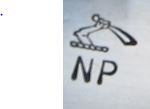
 
Can you show a picture of the symbol?

It is probably a proof mark for whatever country it was first sold in outside the USA.

NP = Nitro Proofed
.44" is obviously the caliber
1-30 may be the rifling twist but I have not seen that in proof marks.
12 1/2 GRS N.C = 12.5 grains of Nitrocellulose powder
200 = 200 grain bullet.
 
I do not recognize the symbol over the NP.

It appears that between the symbol and the NP is the word "Congo."
I have not heard of proof marks for countries in sub-Saharan Africa, but this may be one.
 
It's a (re)load designation:

44 caliber
1-30 tin/lead alloy(or 1:30 twist which would also be in ballpark)**
12.5gr of NC (nitro-cellulose/no-nitroglycerin -- cousin to cordite)


But given what the marking encompass, I bet it's the alloy
 
They are proofmarks from when the rifle was imported into a British Commonwealth country. 44 caliber, 1:30 twist (although in reality it should be 1:36") 200 gr bullet over 12.5 gr of nitrocellulose based powder.

It would not be for the Congo, as the Congo was a French colony until the 1959.
 
Oh, I figured out what 1-30 ' is. It is the case length. .44-40 brass is 1.305" long.
Case length is shown in British proof marks.

But that squiggle does not look like any British proof mark I have seen.
And I am still wondering where the "Congo" came from.
 
Last edited:
The symbol over the "NP" is an arm holding a sword, which is a British symbol used to indicate a nitro proof. What appears to look like a word is, in fact, just a line of circles under the arm.

"1.30"" is the cartridge case length, which is 1.305"

Also, The Congo was never British, nor French, it was Belgian, as in the Belgian Congo.
 

Attachments

  • Nitro Proof.JPG
    Nitro Proof.JPG
    9.4 KB · Views: 54
A row of circles is all it is.
Fooled me, the first picture sure looked like Congo.
I am sorry to have sent the search off in the wrong direction.

The stamp on the receiver is now legible as (Crown) CP which is a London proof house mark.

The (arm + sword) NP is listed as coming into use in 1904, so your rifle spent at least 16 years somewhere else before being imported into or through England.
 
Last edited:
Thanks for all the answers, it is clear to me now and I'm releaved that these markings are all official.

I received a letter from the Cody Firearms Museum that the rifle was built on August 28, 1888.
Received in warehouse on September 06, 1888.
Shipped from warehouse on March 01, 1889, order number 18975.
No other information is available.

That last Macro-picture showed me I have to clean it up abit before showing some more pictures :)
 
Also, The Congo was never British, nor French, it was Belgian, as in the Belgian Congo.
Belgian Congo and the Congo were two different places. One became Zaire in the 1960s after Belgium relinquished the colony, then later the Democratic Republic Of The Congo. The other became The Republic Of The Congo in 1960 after independence from France, and later The People's Republic Of The Congo after the civil war was settled. But since (in this case at least) we seem to have settled the issue of the Congo, it's a moot point.
 
Back
Top