Why not a 303

There's absolutely nothing wrong with the the .303 British round or most of the rifles that have been chambered for it. But like the rifles, the .303 has been overtaken by others which are more suitable for modern conditions. It's longevity was not helped by the tapered, rimmed case.

Even here in the UK, where the .303 was once the most common full-bore calibre, it is almost exclusively used in Lee Enfield rifles of various vintages in classic matches. I am not aware of any production rifle currently chambered for it. That said, those old Lee Enfields still shoot reliably and accurately.

The .308 Win has now taken over as the standard round for basic target shooting, as this was the calibre of the SLR rifle (basically the FN FAL) which eventually replaced the Lee Enfield as the standard issue rifle for the British armed forces. While the military has since moved on to the NATO standard .223 round (in conjunction with the SA 80 rifle), it has not gained the same popularity for target shooting and is less suitable as a large game / deer round.

The .308 Win just opens up so many more options than the old .303 British.

My opinion, anyway!
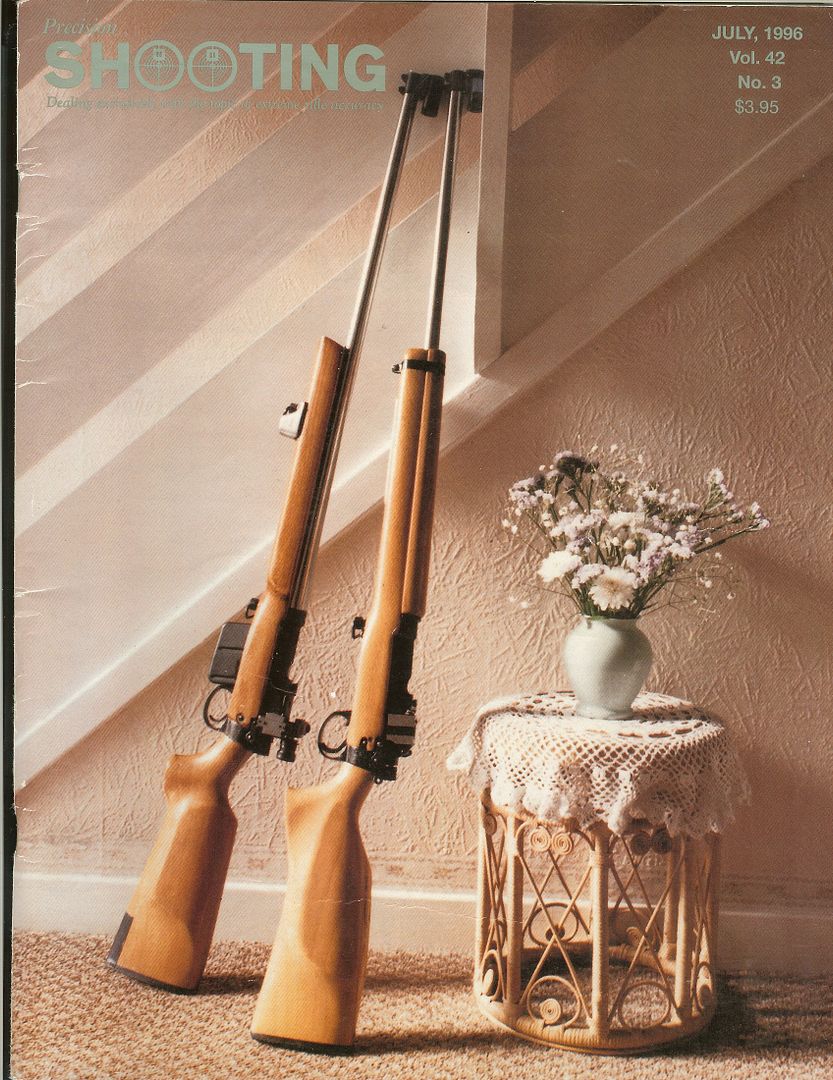
 
PrecisionShootingmagazinecoverJuly1996twoEnfields.jpg


Here is an old magazine cover with a beautiful pic of some 303s used to compete in long range with military ammo.

I have zillions of 303 brit cases.

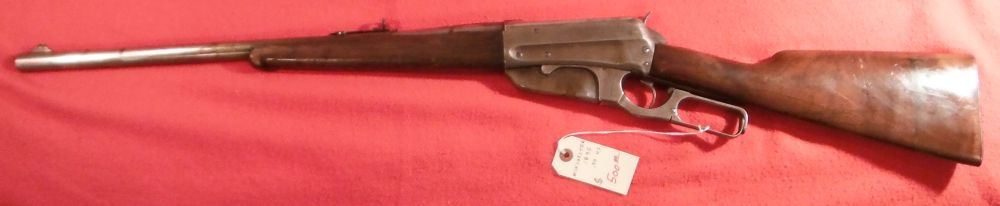
Winchester189530gov19025001-15-2015_zpse1355f91.jpg


This rifle says "30 gov", but I have been shooting 303 brass in it.
 
Regarding the Model 1895 Winchester...

The most common chambering in that rifle was 7.62x54R, for the Russian Government during World War I.

The second most common chambering was apparently .303 British.
 
Why not a .303

The .303 was used in the "Smelly" and had a reputation for being powerful, accurate, and dependable...among MILITARY rifles. The Pattern 14 a little less so because there were fewer of them made and issued.
It's power was the same as the .30/40, which is the same cartridge with a longer neck. That is why Clark is able to shoot .303s in his "30 Gov't." It's chambered for .30/40, not .30/06 as some may think.
Military rifles from THAT era were long, heavy, and powerful, but there were restrictions on ownership of military firearms in the UK. Fewer people owned guns, and hunted, so there was less exposure to rifles by people that weren't actually brought up to use firearms. The US, on the other hand, had lots more areas to hunt, and a heritage for it, so that the Springer, and it's cartridge, were used more. The people did more to make better rifles, and a better cartridge. Rifles became lighter, and cartridges became smaller, so there was more controversy, and more changes.
I've carried a Model 17 Enfield (a version of the P14) since 1959, and I think it's a fine rifle, even if heavier that my other, commercial-sporter rifles.
I think mine is worth a LOT more that other M17s. Realizing that I wouldn't pay $1000 for a primo, matching-number, unmodified M17, I might for MY .300WinMag, Monte-Carlo stocked, cock-on-opening, scoped, Dayton-Traisitor triggered example.
Have fun,
Gene
 
"The Pattern 14 a little less so because there were fewer of them made and issued."

Actually, many P14s were so highly thought of that they were issued to snipers.
 
In my opinion Lee-Enfield rifles both No.1 and No.4 are better deer rifles than most any other bolt action rifle when iron sights are used. The No.4 being the better of the two. They point better, cycle quicker and recoil is no greater than most. The .303 British round is plenty for any animal you are likely to find in North America.
As far as reloading I load for a Remington 700 SPS Varmint in .308, a Winchester M70 in 30-06 and one each No.1 mkIII* SMLE and a NO.4 mkI Enfield. I neck size only and I can tell you that case life is not significantly less for ether Enfield than ether the .308 or 30-06 though my No.4 is a bit harder on cases.
 
It's power was the same as the .30/40, which is the same cartridge with a longer neck. That is why Clark is able to shoot .303s in his "30 Gov't." It's chambered for .30/40, not .30/06 as some may think.
Although it might well be chambered for 30-40 Krag I don't think the rest of that statment is supported by the facts.

Similarly powerfull, yes, but......

30-40 is a .308" bore & the .303 Brit a .311" bore so you'd get big, possibly dangerous pressure increases.

Rim diameter of 30-40 is 0.545" but the .303 Brit is 0.540".

Web diameter for 30-40, immediately in front of the web is 0.457" but for the .303 Brit only 0.455".

30-40 diameter at the end of the case before the shoulder is 0.423" but .303 Brit is 0.401".

30-40 length to case neck is 1.830" but .303 Brit is 1.890"

because of the dimensional differences I can see no way you could force fit a .303 Brit into a 40-40 chamber.
:eek:
 
Neither military nor commercial loads of .303 will fit the chambers of my 1898 Krag or my 1895 Winchester.
Both rifles show the .303 case sticking out 1/8" to 3/16" as I would expect, since the shoulder of the .303 is a bit further forward than that of the .30-40.
Brand new .30-40 rounds drop in and seat on the rim---like they should.

It would be a very bad idea to force fit a .303 in the Krag or the Winchester, assuming it could be done in the first place.
-----krinko
 
Ackley proved a long time ago that if a rifle was chambered for a cartridge, the bullet size may not be as important as would be thought. In his case, he put a .35 Whelen chamber on an '06(.308")
I doubt that Clark's M95 was chambered for the .303, but, if the picture is of his M95, it's QUITE possible that the actual measurements are loose enough to allow chambering. The pressure of the factory ammo is low enough that it PROBABLY would not cause a KB, but the pressure would be higher than normal, and not be enough to cause signs of reallty-high pressure.
I surely would NOT recommend firing any cartridge in a barrel marked for ANOTHER cartridge. MY question would be "Why was the .303 tried in the '.30 Gov't' chamber?" It is "no way" interpreted to be a BRITISH government .30 chambered rifle!
Mike Irwin is quite right...the P14 is probably the more accurate rifle, but my point is that generally fewer people NOW would know anything about the P14.
To people that research military rifles, opinions are based on better information.
The figures that wogpotter uses are based on the blueprint...the rifle, with it's tolerances, could easily be different. My question still remains "Why do you know that a .303 will fire in THAT M95?"
I don't know, and prolly never will know, if a .303 will fit in my Krag.
On my "bucket list" is an M95 Carbine in .30/40. It might even be a Browning, but it PROLLY won't chamber a .303, mostly because I won't try it.
I agree that the .303 will do anything the .308 will, and the .303 was made to compete with the .30/03 (later '06) favorably with the loadings of the day.
The #1 and the #4 better than most bolt actions, with iron sights? Military rifles used for deer??? Maybe. I've used too many commercial sporters( with iron) to believe THAT! Military guns are generally quite heavy, and M70s, M110s, M721-722s and M77s in some models work just fine with iron sights.
Have fun,
Gene
 
I am shooting 303 brass, not ammo.
The rim dia, rim thickness, base dia, and length or 303 Brit and 30/40 Krag are close enough.

I have a number of 303 Enfield No 4 rifles.
I have been soldering shims on the bolt faces to get the headspace to match rim thickness.
I am not the only one who figured that out and started doing that.
 
Clark- Now THAT makes sense. The cases are cheaper and easier to get, especially if you use surplus. All that happens is the cases are some shorter.
Have fun,
Gene
 
My first deer rifle was my Dad's #4 Enfield. That being said, once I got hooked and started hunting more I switched to a 30-06. Every Walmart has 30-06. .303 can be hard to come by.

Both rounds are fine for all hunting in Eastern Hardwoods.
 
IMNEO (In My Non-Expert Opinion) there's nothing wrong with the 303 British except the slightly odd bore size makes bullets for reloading a bit of a bother. The performance of the cartridge isn't in question, just its ease of maintenance.

I like my 303 just fine. But then the 303 Savage uses the .308" bullet and not the .312" the British round uses.


standard.jpg
 
Bullet selection is in deed limited for the .303 British but I haven't found them particularly hard to find. Hornady and Sierra both make very good bullets for it and they are readily available .The round is no harder to load than any other rifle cartridge. I guess I don't understand the "ease of maintenance" comment.
 
I do not see any good reason to use a .303. Other common cartridges do as well or better with a wider availability of ammo here in the US.
So I would wonder, "Why a .303?
Jerry
 
because the .303 has ballistics very similar to the 7.62x54R, 8mm mauser and .308 (and 30-06) and there are better choices that are more popular in the US.
 
The excessively large chambers of the SMLE Lee Enfield .303 No. 1 Mk. III or No. 4 rifle make reloading for the .303 a little more technically difficulty (neck sizing is a necessary or case life will be very short due to significant case expansion upon firing a factory round) compared to reloading for other rifle cartridges.

Really it comes down to a lack of good inexpensive ammunition choices for the .303 vs the abundance of very ugly but economical modern hunting rifles in 30'06.

When you can buy a Savage Axis or Ruger American rifle and achieve MOA to 1.5 MOA accuracy with factory ammunition for less than $400, why search for a beatup WWII relic or sporterized Enfield that will probably only get groups approaching 3 MOA on a good day (with handloads). For a collector or fan of WWII, the Enfield will always be treasured but as a practical hunting or plinking rifle, there are much better and cheaper choices available in the US.
 
Last edited:
Good point. If you already have a rifle chambered in .303 British, of course you want to keep the ammo supply flowing and as a result you'd encourage others to buy rifles that use this cartridge. But the fact remains for folks looking to buy a rifle, there's little reason to seek out anything in .303 British, since there are so many alternatives which do the same thing, and are not encumbered by dwindling (if not thoroughly depleted) stocks of surplus ammo and a shrinking decision pool of newly manufactured ammo and ammo components.

Love your SMLE - but don't be surprised if the ammo gods abandon you.
 
Back
Top