
You are using an out of date browser. It may not display this or other websites correctly.
You should upgrade or use an alternative browser.
You should upgrade or use an alternative browser.
What is an arm (2nd ammendment)?
- Thread starter subsonicenthusiast
- Start date
You know what that means, don't you
It means you like castles and fortifications way too much just like me...
Great, but can we build our own tanks?

For the record, somebody did not too long ago...
http://en.wikipedia.org/wiki/Marvin_Heemeyer
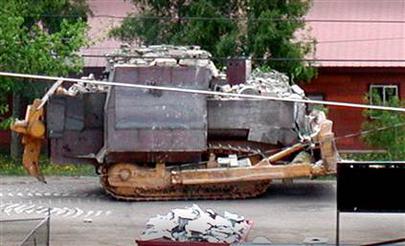
For the record, somebody did not too long ago...
http://en.wikipedia.org/wiki/Marvin_Heemeyer
A license to crennelate does indeed mean (in England) legal permission to build a castle. I've said before that the castle doctrine means nothing if you don't live in a castle.
Actually, Germany, land of some of my ancestors, is really the land of castles. They even have duplex castles.
Actually, Germany, land of some of my ancestors, is really the land of castles. They even have duplex castles.
Funny side-note on castles across Europe. You know what they were for, right? Fr'instance, the ones in England...they were NOT there in case of invasion by French or Vikings or whatever. Oh no. They were there in case the baron in the next county over wakes up one day and decides to deal with his gambling debts via raiding party and goes rampaging around the countryside.
This happened 100x more often than foreign invasion .
.
This happened 100x more often than foreign invasion
.HarrySchell
New member
I read the term arm as noted, that which an individual could maintain, carry and effectively use, as noted in the comments above.
The word "arm" carried forward to our Bill of Rights from much earlier law when personal firearms were rare. The blade and bow were the most prevalent.
This puts the self-defense issue as a primary aim, with a militia being a group of armed citizens to deal with tyranny writ larger than the oppression, political or criminal, of an individual.
Yes, the militia as counterbalance to oppressive government is a huge matter, but in many cases the law addressed the more common instance of criminal or political attacks on individuals or small groups. That is the situation we find ourselves in today, MOST of the time. "Shall issue" carry laws are the enaction of effective self-defense on an individual basis.
Self-defense from organized poltical oppression has to be built on self-defense as individuals. Can't reasonably have the former without the latter.
Living in Switzerland with "shall issue" rules on handguns, that would fully enact both visions of 2A.
The word "arm" carried forward to our Bill of Rights from much earlier law when personal firearms were rare. The blade and bow were the most prevalent.
This puts the self-defense issue as a primary aim, with a militia being a group of armed citizens to deal with tyranny writ larger than the oppression, political or criminal, of an individual.
Yes, the militia as counterbalance to oppressive government is a huge matter, but in many cases the law addressed the more common instance of criminal or political attacks on individuals or small groups. That is the situation we find ourselves in today, MOST of the time. "Shall issue" carry laws are the enaction of effective self-defense on an individual basis.
Self-defense from organized poltical oppression has to be built on self-defense as individuals. Can't reasonably have the former without the latter.
Living in Switzerland with "shall issue" rules on handguns, that would fully enact both visions of 2A.
The Viking-Danish thing was over when the Normans got there but there were no castles there then in 1066. But basically the castles, which were mostly (but not entirely) fortified private residences, were to help the newly minted nobles hold on to the land they had been given after the invasion. They weren't especially to defend themselves from one another, just their subjects.
Along the border country, however, that is what they were for. They were always raiding back and forth over the border to increase their stock of stock and anything else they could manage to carry away. This is the border between England and Scotland. That, by the way, is the first area where arms control was attempted, mainly after the '45. That was another period in history that helped populate the American colonies.
Here's a tidbit of history. I grew up in Mercer County, West Virginia, named after Mercer County, New Jersey. Mercer County is named after Hugh Mercer, who was killed at the battle of Princeton. He had actually been present at the battle of Culloden but was on the wrong side. Thereafter he emigrated (illegally, I suppose) to Pennsylvania but eventually settled in Fredericksburg, VA. Although he also served in colonial militia units during the French & Indian war, he served in the Continental Army. General Wolfe, victor at the Battle of Quebec, was also at Culloden. But he was killed at Quebec (and so was Montcalm). Just thought you'd like to know.
Along the border country, however, that is what they were for. They were always raiding back and forth over the border to increase their stock of stock and anything else they could manage to carry away. This is the border between England and Scotland. That, by the way, is the first area where arms control was attempted, mainly after the '45. That was another period in history that helped populate the American colonies.
Here's a tidbit of history. I grew up in Mercer County, West Virginia, named after Mercer County, New Jersey. Mercer County is named after Hugh Mercer, who was killed at the battle of Princeton. He had actually been present at the battle of Culloden but was on the wrong side. Thereafter he emigrated (illegally, I suppose) to Pennsylvania but eventually settled in Fredericksburg, VA. Although he also served in colonial militia units during the French & Indian war, he served in the Continental Army. General Wolfe, victor at the Battle of Quebec, was also at Culloden. But he was killed at Quebec (and so was Montcalm). Just thought you'd like to know.
English traslations...
Yes, BlueTrain, it is. But, they don't call most of them castles, like we do. The German word translated as "castle" is Schloss, and most of what the Germans call Schloss are what we would call palaces or mansions. Not the typical fortress castle we call a castle. The Germans call those Festung, which is translated as "fortress".
The one exception I know of is Schloss NeuSchwanstein crazy Ludwig's castle near Fuessen, Bavaria. It is the classic fairy tale castle, and was the inspiration for Disney's magic castle. Its one of the most photographed castles in the world, a really neat place. The entire interior is decorated with painting and statues from Wagner's operas. Ludwig was a Wagner nut, among other things. I've been there, if if you ever go to Europe, you should go. Go in the spring or summer, or take a nice coat!
Here's a point to consider, even back in the days of our founding, a distinction was made between small arms (those easily carried by an individual) and "arms" (everything else, cannon included). Now, considering that our founders included some well educated men, and also military experience, if the intent was to limit govt's authority to regulate our right to arms to just small arms, why doesn't the Second Amendment say "small arms"?
Actually, Germany, land of some of my ancestors, is really the land of castles. They even have duplex castles.
Yes, BlueTrain, it is. But, they don't call most of them castles, like we do. The German word translated as "castle" is Schloss, and most of what the Germans call Schloss are what we would call palaces or mansions. Not the typical fortress castle we call a castle. The Germans call those Festung, which is translated as "fortress".
The one exception I know of is Schloss NeuSchwanstein crazy Ludwig's castle near Fuessen, Bavaria. It is the classic fairy tale castle, and was the inspiration for Disney's magic castle. Its one of the most photographed castles in the world, a really neat place. The entire interior is decorated with painting and statues from Wagner's operas. Ludwig was a Wagner nut, among other things. I've been there, if if you ever go to Europe, you should go. Go in the spring or summer, or take a nice coat!
Here's a point to consider, even back in the days of our founding, a distinction was made between small arms (those easily carried by an individual) and "arms" (everything else, cannon included). Now, considering that our founders included some well educated men, and also military experience, if the intent was to limit govt's authority to regulate our right to arms to just small arms, why doesn't the Second Amendment say "small arms"?
I lived in Germany for two years and I've been to Neuschwanstien. The "real castle" with a battle history is above the little village where you have to park. I also visited one or two other castles there, too. My own family name is an anglicized form of Questenberg, where there was once a castle and there's a photo of the place on the wall in my office. I just looked at it. I also have a photo of Kilimanjaro, too, and I just looked at it, too.
I think the point of the 2nd admendment is either obsolete or ignored these days. If you read the amendment (it's only one sentence) you first see "A well regulated militia," then you see "security of a free state," and then finally it mentions "arms." Short and sweet.
It doesn't mentioned carrying concealed weapons (thought T.J. himself carried one; you can see it at Montecello); it doesn't mention women having guns (it just says people), it doesn't say anything about training from a certified instructor, it doesn't say "arms suitable to your condition," etc., etc., etc. And it definately doesn't mention that the purpose of keeping and bearing arms is to overthrow the national government. No indeed. And it wasn't to allow the formation of private armies, which some quaintly wish to call militias. God help Libya.
The purpose was to allow the existance of militia, which was a required civic function (equally quaint) so that a standing army would not be required. They didn't like standing armies. Today we adore them, at least where I live, liberal and progressive thought we may be around these parts, but yet we are very pro-military. You may not understand that. At the time, however, one of the problems with a standing army was that they sat on your doorstep. That's the short version.
Is the National Guard a modern day militia? Another story for another day. That's pretty much the Swiss system.
I think the point of the 2nd admendment is either obsolete or ignored these days. If you read the amendment (it's only one sentence) you first see "A well regulated militia," then you see "security of a free state," and then finally it mentions "arms." Short and sweet.
It doesn't mentioned carrying concealed weapons (thought T.J. himself carried one; you can see it at Montecello); it doesn't mention women having guns (it just says people), it doesn't say anything about training from a certified instructor, it doesn't say "arms suitable to your condition," etc., etc., etc. And it definately doesn't mention that the purpose of keeping and bearing arms is to overthrow the national government. No indeed. And it wasn't to allow the formation of private armies, which some quaintly wish to call militias. God help Libya.
The purpose was to allow the existance of militia, which was a required civic function (equally quaint) so that a standing army would not be required. They didn't like standing armies. Today we adore them, at least where I live, liberal and progressive thought we may be around these parts, but yet we are very pro-military. You may not understand that. At the time, however, one of the problems with a standing army was that they sat on your doorstep. That's the short version.
Is the National Guard a modern day militia? Another story for another day. That's pretty much the Swiss system.