The topic is Free-floating barrels and my M77

wbw

New member
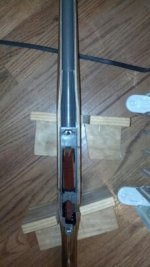
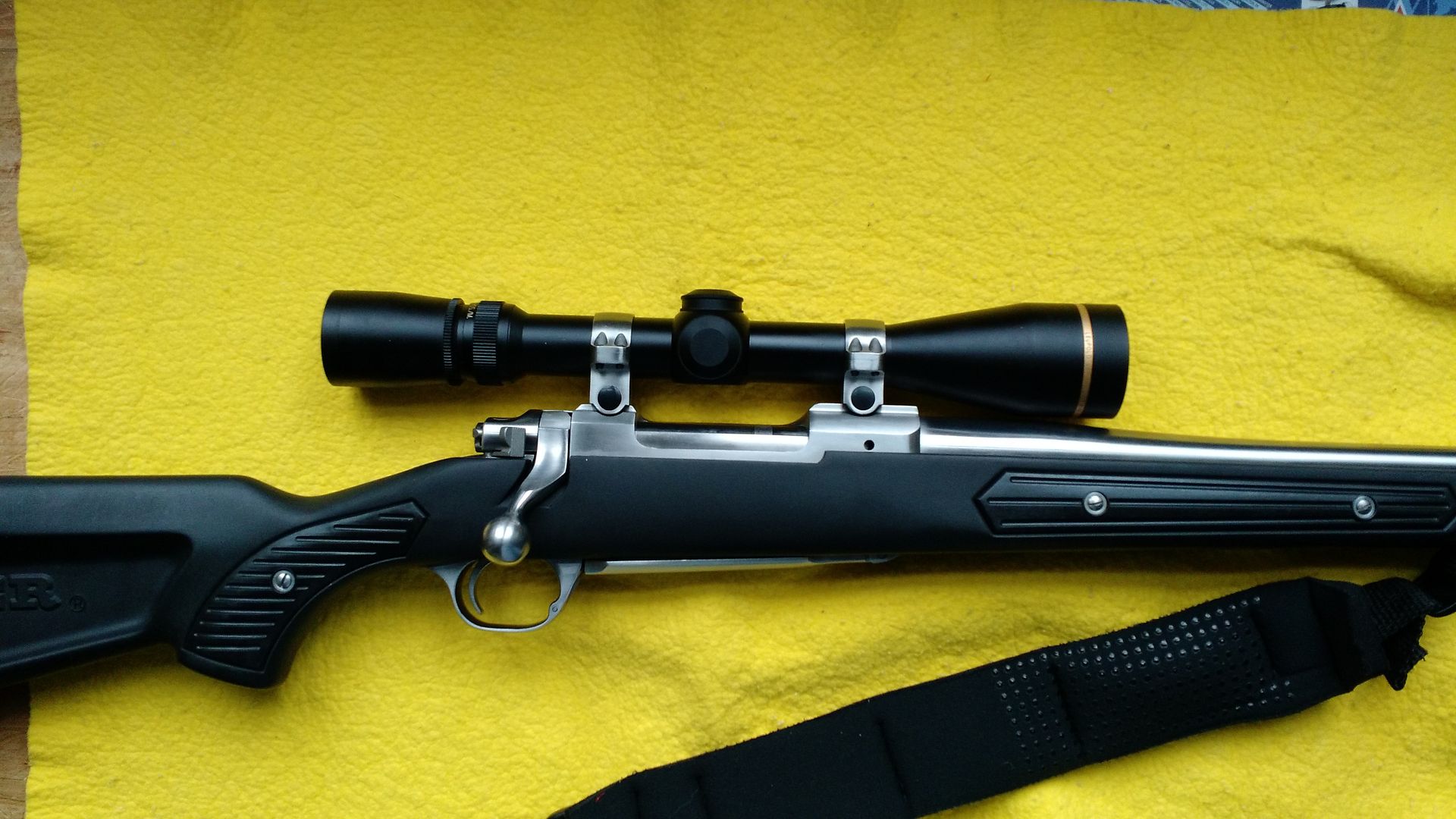
Some of you have seen my post about the Ruger M77 Mk II that I bought over the weekend. The barrel on that 20 year old rifle is not free-floated. Looking at the picture of the fore end it is obvious that it couldn't be. It has those two screws going through it (see picture below).

So I was thinking about an online article written by Chuck Hawks that I had read. In the article titled Compared: Bolt Action Economy Rifles Chuck had this to say about today's free-floated barrels, "Barrels are typically free-floating, because it is a cheap way to avoid the time and cost involved in precisely bedding the barreled action into the stock. While a free-floating barrel is widely (but deceptively) advertised as an accuracy feature, the truth is sporter weight barrels usually shoot more accurately when bedded full length in a rigid stock. Heavyweight varmint and bench rest rifle barrels are typically more accurate when free floating. Sporter barrels and heavy contour barrels are not the same and should be bedded differently, a distinction ignored in all but one of our economy rifles."

So is my 20 year old M77 Mark II not free-floating because it's 20 years old and the new wave of budget rifles hadn't come along yet? Is it not free-floated because that barrel needed to have pressure points half way down the barrel?

I have not taken the stock off of the barrel yet because I'm assuming that there is a certain amount of torque required to properly set those screws and I don't have a torque wrench.

So any thoughts you wish to share about free-floating barrels and lack of free-floating in the M77 MK II?

Thanks for your input if you do.

Edited to add that I have not shot this rifle yet and I'm not asking you folks whether I should make any modifications. This is just a discussion about free-floating barrels and maybe why the M77 wasn't.
 
Last edited:
wbw,

Followed your original post for a bit, and I see you don't hunt or shoot competition. It looks like a nice rifle, and by the comments you got about it, and the price you paid for it, you hit a home run. Have you shot it yet? I guess accuracy would be the issue for me personally before I'd think about the bedding question. Maybe it will shoot the "O" out of a Coke can at 200 yds. just the way it is. FWIW, if it ain't broke, don't fix it, and that's just my humble one.

New and old guns are like the proverbial box of chocolates...

Merry Christmas,

reinert
 
Ruger strongly advises not to free float their guns. Even the brand new Hawkeyes are bedded the same. Ruger uses a unique angled action screw that pulls the barrel and action down and back into the stock. Everyone else just pulls the action down.

I've read of some others who have floated Ruger actions. The results seem to be mixed. Some report it helped, others claim it made things worse, most report no difference. Shoot it 1st before you do anything.

The biggest problem those rifles tend to have is with heavy triggers. There are some on-line methods posted for DIY trigger jobs. Most involve cutting a coil or 2 off the trigger spring or replacing it. Some polish the trigger and sear.

BTW, Chuck Hawks gives bad advice. Find another source for information. MOST all rifles shoot better free floated and the concept is a lot more than 20 years old. Rugers seem to be the exception and that is only because of a totally different bedding system.
 
I believe the screws you are referring to are decorative and nothing more. Have you tried running a dollar bill down the stock to see if it's free floating?

In 199? I purchased a M77 Mark II in 300 WSM. It had a wood stock on it and the only thing I did not like about that rifle was the trigger. It was somewhere near 7 pounds (most of the time) and gritty with travel. I replaced it with a Timney and it made a huge difference. The original stock was not free floating, it had a pressure point but the rifle shot accurate so I left until I upgraded the barrel a few years ago. The new stock is a Hogue full bed block but in the end I had to skim bed the action to get the accuracy I thought the gun could produce.
 
I've updated the first post to say that I have not shot this rifle yet. I'm not looking to make any modifications (except maybe trigger). This is just for some discussion about free-floating barrels and maybe why the M77 wasn't.
 
For AllenJ, yes I tried the dollar bill test and it's not floated. Not even close. But maybe that's fine.
 
Both of my factory wood-stocked M77's shoot moa or better with sporter barrels. I have an M77 22-250 with a heavy barrel which is floated. I'm almost positive it's not a factory barrel as it came from a 'smiths personal collection. That one will stack up holes pretty good ;)
 
When I first heard of free floating a barrel it was in a Guns & Ammo article by Ross Seyfried 30 years ago. He made the point that free floated barrels were not more accurate but more consistant. That was if the wood stock they were bedded in had a tendecy to move with the climate.

He also made the point that he had 100 year old rifles with fully bedded barrels that still shot tiny groups. One other writer made the point that when there is a gap between the barrel and the stock that stuff like small twigs and dirt could cause the barrel to change point of impact. He was all for tightly bedded barrels.

I have never owned a boat paddle ruger rifle but I have looked them over. The synthetic stock from ruger is way better than the flimsy stocks some guns come with these days.

I would just go shoot it and then worry about changing it. I just shot a remington BDL in 7x57 that has never had the trigger touched or the stock bedding modified. It shot groups that were just barley over an inch at 100 yards with ammo I had loaded for a different rifle. I have no intention to redo anything on that rifle.
 
Last edited:
My first suggestion to the OP is shoot the rifle a bit with different brands of ammo. It's bound to like one better that the others or maybe even all off them.
Then, if I think free floating the barrel might improve things, I pull the barreled action from the stock and fit a couple of shims, usually from an old credit card, one under the receiver just behind the recoil lug and the other under the tang at the rear. One the Ruger, watch out you don't lose the little wirelike piece that connects the safety button to the rest of the gun. Put everything back to gather and if you don't have a "fat wrench" (torque wrench) tight the front screw gorilla tight. (I believe the torque setting for the front screw on a Ruger is around 75 inch pounds. You can call Ruger for the spec.) Rear screw should be good and tight but not gorilla tight. Center screw should be just enough that it won't back out and just enough to keep the floor plate latched. Easy to find by trial and error. Now with the shims in place the barrel should be free floated and a shooting trial should let you know if it helps with accuracy. You might need to double up on the front shim if you can't clear the pressure point at the tip of the forearm.
His does work. Years ago I had an M77 in 7x57 that I shimmed in the m manner mentioned. It went from 1.5" to .75" with the shims. Shot so well that way that I never removed the shims and floated the barrel. Sorry I ever sold that one.
Paul B.
 
This is what it took to make one of mine shoot. Hopefully the photo is attached.
 

Attachments

  • Phone Switch 1276.jpg
    Phone Switch 1276.jpg
    27.9 KB · Views: 675
Pillars, full length bed on receiver, and fiber glassed fore end/floated barrel channel. Also, bedded bottom metal, magazine box, and trigger guard. Rugers are difficult to bed because of the shape of the receiver bottom and recoil lug. The angled action screw also makes installing pillars more difficult.

I have three of them, the other two shot very well as they came out of the box, (one with black plastic stock) but this one did not. It now pretty much shoots bug holes. I can hold it by the stock, tap the barrel and it sounds like a tuning fork.

So, if it shoots even remotely OK I would leave it alone. They are not as easy to bed and float as others are.

Another complaint you will often hear about the M77 MkII is that the triggers are terrible. All they require is some time and careful polishing with a water stone, and they snap like the glass rod you hear of.
 
Last edited:
I think you should shoot it before you start modifying it.

Many rifles shoot very accurately without being free floated. See how she shoots.
 
What Mr. Hill suggested. Try it first. Free floating can be ruined if you get dirt or twigs in the barrel channel of that rifle. The key to accuracy is consistency in everything. A consisten pressure point on a barrel is superior to having various stuff fall or come to rest between your barrel and stock.

BTW, I think those two screws are only to hold the forearm inserts on.
 
For those who want to know why I want to float the barrel when I haven't shot the rifle yet, I never said I wanted to float the barrel. I added the last sentence to post #1 saying that this is a discussion about free-floating and possibly why the M77 wasn't. It's been a good discussion, but most seem to think I'm trying to make changes without trying the gun first. I just wanted to start a discussion. A lot of today's rifles tout the fact that their barrels are free-floated and that makes them more accurate. But Chuck Hawks thinks it's done for economic reasons. Maybe he's right, maybe he's not. He sure knows more about the workings of a rifle than I do. That being said, I truly value the opinions of those on this board. I'm always impressed with the knowledge displayed in the discussions on here and I try to learn from them.

So I was just looking for a discussion about floating in general and maybe why the M77 Mk II wasn't. Right now I'm not planning to make any modifications to the rifle.
 
Skinny barrels often shoot better with a consistent upward pressure on the barrel. Its easier to cut the channel big and leave a slight bump than to precisely fit the wood to the contour of the barrel. That being said, the issue that occurs is that wood stocks will swell and warp (if not completely sealed) with temperature and humidity changes, thus changing the zero.

Synthetic stocks typically don't do that. They usually aren't as stiff either, because of that, the issue there is that changes in shooting position, and varying pressure on the fore end of the rifle from shot to shot will have an effect on repeatable accuracy with them.

Some are better than others. The Ruger synthetics are heavier and stiffer than most (I think yours is Zytel or something like that) so they aren't as bad. IMO Remington tupperwares are the worst.

The stiffer the better, the more resistant to moisture the better, and the closer the fit the better. So the discussion point becomes how to achieve the best compromise of the considerations above, get reasonable hunting accuracy, and do it in a reasonably attractive product that you can make a profit on.

I think Ruger accomplished that with the M77 rifles. They are good solid rifles, and they can be as accurate as any other rifle. They are hunting rifles, not target rifles and are designed with that in mind. The pressure bump is the easiest way for them to achieve acceptable hunting accuracy with a skinny barrel.

Just a side note. I know quite a few old guys that have probably shot a warehouse full of deer, it seems most of them shoot M77s and Rem 742s.

They don't go to Camp Perry.
 
Last edited:
Back
Top