
You are using an out of date browser. It may not display this or other websites correctly.
You should upgrade or use an alternative browser.
You should upgrade or use an alternative browser.
30-30 vs. 32 Winchester Special
- Thread starter kcub
- Start date
Jack O'Conner
New member
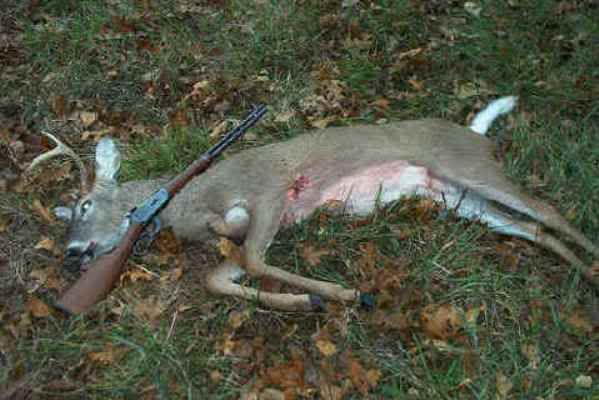
Both cartridges will down deer sized animals without any problems when the shooter does his part. Despite their ages of over 100 years, they're still popular hunting cartridges here in Pennsylvania.
Jack
Jack

The late 1890s was a time when any difference could be used to sell your product. And this tradition carried on for some time.
On paper, the 2 are about identical, other than caliber. Some folks swear there is a noticeable difference in their effect on game, others don't see it.
The generally accepted reasoning today is that the .32 Special was intended to be reloadable with black powder and give better results than the .30-30. (twist rate, fouling, etc.)
The .32 Special is one of those old rounds that has not yet been fully abandoned, because it does work, and the rifles it came in are still popular. I don't know if it is still a currently offered chambering or not, sales of new .32SPecials have been ...weak..for ages, even when they were a regular catalogue item.
Ammo production is "seasonal" meaning it is not regularly produced (not in continuous production). When stocks reach a set "low", they tool up and do a production run.
There's no reason I can see for choosing a .32Special over a .30-30 today, other than you want one, or the rifle you want is a .32 and not a .30-30.
My Dad carried a Win 94 .32SPl as his deer rifle for many years, and it worked well. He didn't choose it because it was a .32, he chose it because he got a heck of a deal on the rifle from the original owner's widow ($20, and get it out of my house, please!) Used it for about a decade or so, until one season's sight in where it (for no identifiable reason) decided to shoot 6" lower than the lowest sight setting, at which point Dad decided he was in the market for another deer gun.
On paper, the 2 are about identical, other than caliber. Some folks swear there is a noticeable difference in their effect on game, others don't see it.
The generally accepted reasoning today is that the .32 Special was intended to be reloadable with black powder and give better results than the .30-30. (twist rate, fouling, etc.)
The .32 Special is one of those old rounds that has not yet been fully abandoned, because it does work, and the rifles it came in are still popular. I don't know if it is still a currently offered chambering or not, sales of new .32SPecials have been ...weak..for ages, even when they were a regular catalogue item.
Ammo production is "seasonal" meaning it is not regularly produced (not in continuous production). When stocks reach a set "low", they tool up and do a production run.
There's no reason I can see for choosing a .32Special over a .30-30 today, other than you want one, or the rifle you want is a .32 and not a .30-30.
My Dad carried a Win 94 .32SPl as his deer rifle for many years, and it worked well. He didn't choose it because it was a .32, he chose it because he got a heck of a deal on the rifle from the original owner's widow ($20, and get it out of my house, please!) Used it for about a decade or so, until one season's sight in where it (for no identifiable reason) decided to shoot 6" lower than the lowest sight setting, at which point Dad decided he was in the market for another deer gun.
Remember the 30-30 was at the transition from black powder to smokeless. No one really knew for sure that the new smokeless powder would quickly dominate so Winchester hedged their bets somewhat by offering the very similar 32 Special designed to work best with older black powder and 30-30 with smokeless powder.
Smoke & Recoil
New member
And to add to the confusion...you can fire .30-30 Win in a .32 Special but
don't go the other way, as the .32 Special will not chamber, because the .32
Special bullet diameter is larger. (.30-30, .308 dia) vs (.32, .321).
don't go the other way, as the .32 Special will not chamber, because the .32
Special bullet diameter is larger. (.30-30, .308 dia) vs (.32, .321).
Last edited:
A pause for the COZ
New member
I have a few 30-30's Marlin 336, Savage 340. Good guns and I like them allot.
A few years ago I picked up a 1941 Marlin model 1936 in 32 win special.
It had some replacement parts and was priced as a shooter. So I purchased it as such. I had some scope mounts added and found a old period Weaver 4 power to put on it.
Its a cast bullet shooters dream. It took me all of two seconds to work up a load that shoots 2 inch at 100 yards.
170gr gas checked bullet ahead of 16gr of 2400. Will get it done 100% of the time.
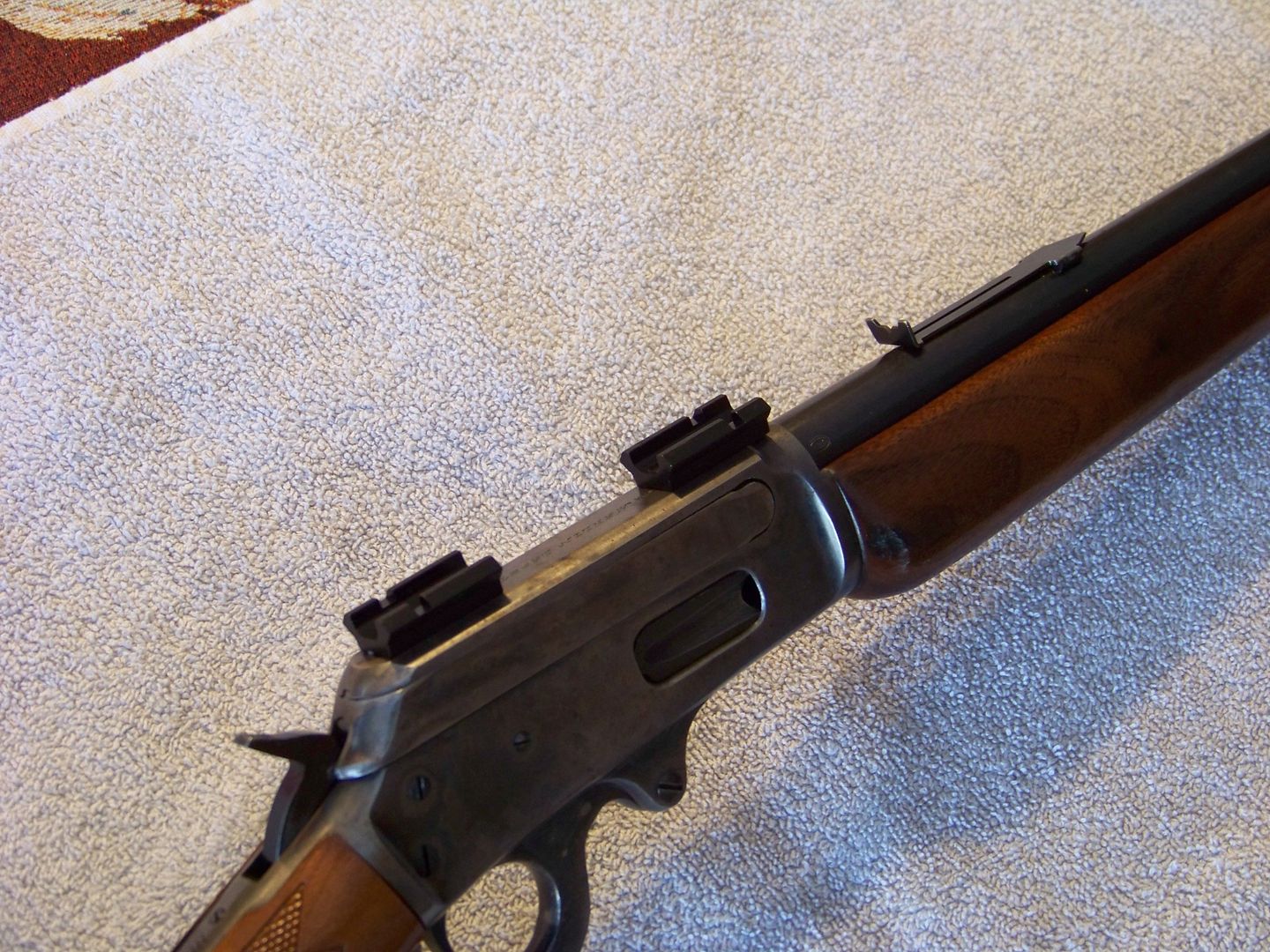
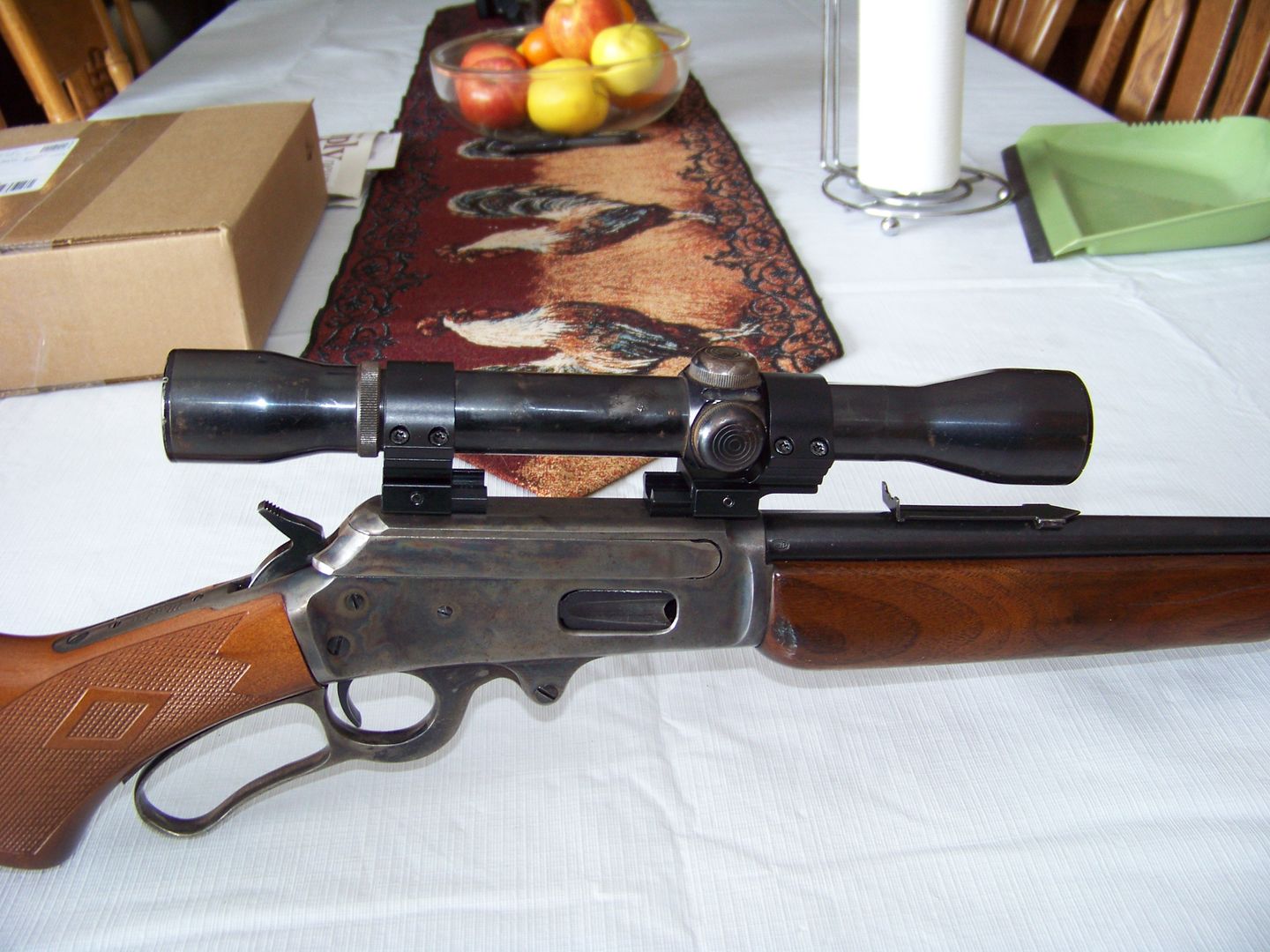
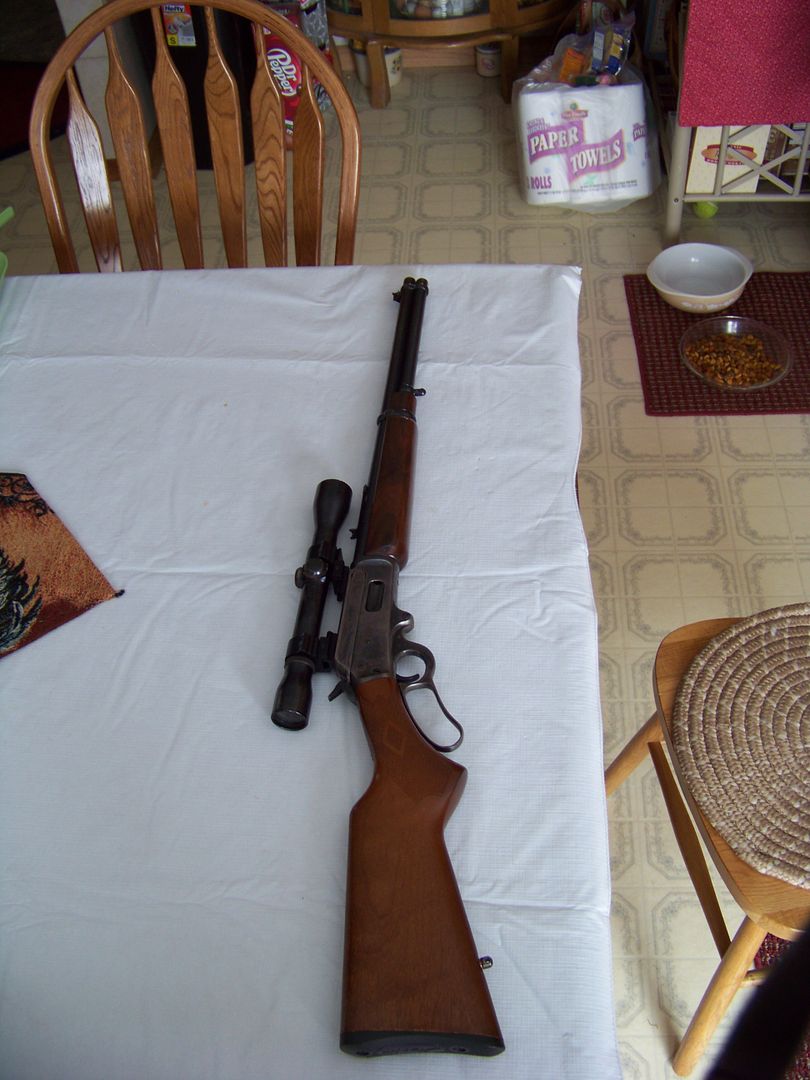
IMOP a old 1941 Marlin shooter is still better than a new 336 of any caliber. The trigger on both my 1958 336 and this one are like butter.
You dont need to worry about finding brass for your loads. If you have a 30-30. Just run the 30-30 brass through a 32 win special sizing die. Wala you now have 32 win special brass. Its the exact same case just with a wider neck for the 32's.
A few years ago I picked up a 1941 Marlin model 1936 in 32 win special.
It had some replacement parts and was priced as a shooter. So I purchased it as such. I had some scope mounts added and found a old period Weaver 4 power to put on it.
Its a cast bullet shooters dream. It took me all of two seconds to work up a load that shoots 2 inch at 100 yards.
170gr gas checked bullet ahead of 16gr of 2400. Will get it done 100% of the time.
IMOP a old 1941 Marlin shooter is still better than a new 336 of any caliber. The trigger on both my 1958 336 and this one are like butter.
You dont need to worry about finding brass for your loads. If you have a 30-30. Just run the 30-30 brass through a 32 win special sizing die. Wala you now have 32 win special brass. Its the exact same case just with a wider neck for the 32's.
Last edited:
Oh crap. Now I want a 32.
I can't imagine why. The 32 Special may have had a reason to exist back when smokeless powder was a newfangled notion, but any ballistic difference between it and a 30-30 is nonexistant. Unless you are convinced that this smokeless powder fad is about to go away soon, there's no reason to own one, given that 32 Special ammo is hard to find and expensive if you do find any.
Sometimes my old mind doesn't recall facts correctly anymore, but something in the back of my head is telling me the .32 had a slower twist (maybe 1:16??) in order to shoot black powder better than the 30/30. The slower twist allowed more shots with less fouling. I seem to remember some .32 trappers made at one time that still utilized the slower twist of years ago. So much for my feeble memory...maybe someone can chime in with actual facts.
something in the back of my head is telling me the .32 had a slower twist (maybe 1:16??) in order to shoot black powder better than the 30/30.
That's quite true. The down side is that the slightest wear on the slow twist barrel results in poor accuracy. Again, the 32 Special is just the thing if you want 30-30ish ballistics and plan to use black powder, but otherwise it's a lot easier to get 30-30 ballistics from a 30-30.
A pause for the COZ
New member
All true. But if you want to shoot cast bullets, better get one. They are too easy.
Not that the 30-30 is hard esp if you find a old one like I have with Ballard rifling.
So yes you dont need one. but I suspect you wont be unhappy if you did.
The more the better. No need to over pay though. Hold out till you find a deal.
Not that the 30-30 is hard esp if you find a old one like I have with Ballard rifling.
So yes you dont need one. but I suspect you wont be unhappy if you did.
The more the better. No need to over pay though. Hold out till you find a deal.
The historical story (in a nutshell)on the 32 spl and the 30 WCF (30-30) is as follows;
Both had .300 bore diameters and the 30-30 was cut with rifling .004 deep to come to .308" at the grooves. (like most 30 cal American cartridges, which was following the 30-40 Krag military size bore and groove diameter)
The 32 special was the same barrel blank, starting at .300" bore and was cut with .0105" deep rifling to better hold lead bullets and work with black powder.
Original Winchester specs call for both bores to be .300, but the rifling in the 32 is deeper, measuring .321" at the grooves.
In 1895 reloading smokeless powder was not done much, and probably 99.9% of all those that loaded their own loaded with black powder. So the 32 special was offered for those that demanded a rifle that they could load their own ammo for.
Both had .300 bore diameters and the 30-30 was cut with rifling .004 deep to come to .308" at the grooves. (like most 30 cal American cartridges, which was following the 30-40 Krag military size bore and groove diameter)
The 32 special was the same barrel blank, starting at .300" bore and was cut with .0105" deep rifling to better hold lead bullets and work with black powder.
Original Winchester specs call for both bores to be .300, but the rifling in the 32 is deeper, measuring .321" at the grooves.
In 1895 reloading smokeless powder was not done much, and probably 99.9% of all those that loaded their own loaded with black powder. So the 32 special was offered for those that demanded a rifle that they could load their own ammo for.
reynolds357
New member
Kcub, the .30 WCF was the name winchester gave the cartridge when they brought it out. Marlin refused to use the name "Winchester center fire," so they called it the .30-30. The second 30 is for 30 grains of smokeless powder, not black powder. It was developed as a smokeless cartridge.
"Practical" limit is a slippery term.
First we have to define practical.
What is the limit of the killing effect is something that has an awful lot of variables.
What is the game? How big? Are we talking about moving or standing game?
How accurate is the particular rifle and ammo?
Some lever actions rival bolt actions in their accuracy, and some shoot about "modified choke"
I know 3 cowboys in Wyoming and Idaho who use these rifles to kill elk every year, and have been doing it for about 40 years. I also know a Basque sheep header in Nevada who has killed at least a dozen coyotes with his old Marlin M36 WHILE I WAS WATCHING at between 300 and 400 yards. He knows that gun as well as he knows his own hand.
So to answer that question is not really something we can do here.
If you have a rifle that will hold 2 MOA and you have the skill to use it at 440 yards I'd say 1/4 mile is a good guess. But if you are not a real wizard with that rifle you might be limited to about 100 yards.
As with most questions about "how good is X the real question is not about the hardware but about the skill of the man using it.
First we have to define practical.
What is the limit of the killing effect is something that has an awful lot of variables.
What is the game? How big? Are we talking about moving or standing game?
How accurate is the particular rifle and ammo?
Some lever actions rival bolt actions in their accuracy, and some shoot about "modified choke"
I know 3 cowboys in Wyoming and Idaho who use these rifles to kill elk every year, and have been doing it for about 40 years. I also know a Basque sheep header in Nevada who has killed at least a dozen coyotes with his old Marlin M36 WHILE I WAS WATCHING at between 300 and 400 yards. He knows that gun as well as he knows his own hand.
So to answer that question is not really something we can do here.
If you have a rifle that will hold 2 MOA and you have the skill to use it at 440 yards I'd say 1/4 mile is a good guess. But if you are not a real wizard with that rifle you might be limited to about 100 yards.
As with most questions about "how good is X the real question is not about the hardware but about the skill of the man using it.